What Is Market Segmentation Strategy for E-commerce Growth

At its core, a market segmentation strategy is simply the art of breaking down your large, diverse audience into smaller, more focused groups based on things they have in common. Imagine you have a giant, messy bin of LEGO bricks. Trying to build a specific castle from that jumble is a nightmare. But if you first sort the bricks into smaller bins by color, size, and shape, building becomes so much easier. That's exactly what segmentation does for your marketing.
The goal is to scale without dubious shortcuts and without hurting your credibility.
Why Market Segmentation Is Your E-commerce Superpower
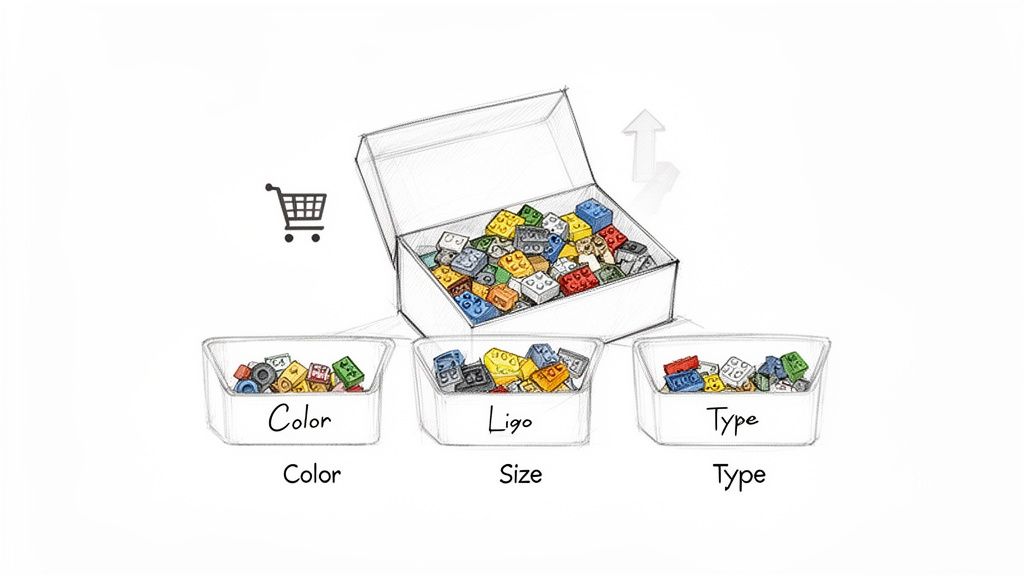
Simply put, segmentation stops you from shouting into a crowded room and hoping the right person happens to listen. The old "one-size-fits-all" marketing message rarely works because it ends up appealing to no one in particular. Instead, you get to craft targeted, relevant messages that feel like they were written just for specific groups of people.
This isn’t some abstract marketing theory. It’s a foundational strategy for thriving on competitive platforms like Shopify, Amazon, and TikTok Shop.
For online sellers, this approach means you can customize everything from the products you recommend to the ads you run, aligning them perfectly with what each customer group actually wants. It’s the difference between blasting a generic "10% Off Everything!" email to your entire list versus sending a special offer on hiking boots exclusively to customers who've already bought outdoor gear. Which one do you think gets more clicks?
The Core Goal of Segmentation
The main idea is to accept a simple truth: your customer base isn't one giant, uniform blob. It's a vibrant collection of different people with unique needs, motivations, and shopping habits. Once you identify these smaller groups—your segments—you can put your time, money, and effort where they'll make the biggest impact.
This shift delivers real, measurable results. Instead of burning through your ad budget showing ads to people who will never buy, you can concentrate your spending on high-potential segments. Your return on ad spend (ROAS) will thank you.
A market segmentation strategy is all about dividing a broad customer base into smaller, more uniform groups based on shared traits like demographics, behaviors, or needs. It’s a game-changer. Just look at email marketing, where a staggering 78% of marketers say that segmenting their subscriber list is their single most effective campaign tactic. You can dive deeper into these kinds of marketing statistics on Statista.com.
Tangible Benefits For Your Online Store
Putting a good segmentation strategy in place directly boosts your bottom line and helps you build real, lasting connections with your customers. It’s how you move from generic, forgettable promotions to creating personalized experiences that make people want to stick around.
The benefits of a well-executed market segmentation strategy are clear and almost immediate. It's not just about better marketing; it's about building a smarter, more resilient business.
Key Benefits of Market Segmentation for E-commerce
| Benefit | Impact on Your E-commerce Business |
|---|---|
| Increased Conversion Rates | When you show the right product to the right person, they are far more likely to click "buy." |
| Enhanced Customer Loyalty | Customers who feel seen and understood stick around, make repeat purchases, and tell their friends. |
| Improved Return on Ad Spend (ROAS) | Stop wasting money on uninterested audiences. Focus your budget on the people most likely to convert. |
| Better Product Development | Segment insights can uncover new product ideas or reveal opportunities to better serve a specific niche. |
Ultimately, these benefits compound. Higher conversions lead to better ad performance, which frees up a budget for new product development, which in turn attracts more loyal customers. It’s a powerful cycle of growth, and it all starts with understanding who your customers really are.
The 4 Core Types of Market Segmentation
Imagine your entire customer base is a big, diverse crowd at a music festival. If you try to talk to everyone at once, your message gets lost. A market segmentation strategy gives you a set of lenses to see that crowd not as one giant blob, but as smaller, distinct groups of people who share common ground.
When you break down the whole, you can connect with each part in a way that actually resonates. The four main lenses we use are Demographic, Geographic, Psychographic, and Behavioral. Each one gives you a different angle for understanding who your customers are and what they really want.
H3: Demographic Segmentation: The "Who"
Demographic segmentation is probably the one you’re most familiar with. It's the most straightforward way to slice up your audience, focusing on objective, statistical data. It answers the basic question: Who is actually buying my product?
This method uses hard facts and easily quantifiable traits to create clean, simple audience groups. It’s the bedrock of any good segmentation strategy.
Common demographic variables include:
- Age: Are you talking to Gen Z, Millennials, or Baby Boomers? Their needs and references are worlds apart.
- Gender: Does your product naturally appeal more to men, women, or a gender-neutral audience?
- Income: Is your product a budget-friendly find or a premium, aspirational purchase?
- Education Level: Should your messaging be simple and direct, or can you get more technical?
- Occupation: Are your customers students, C-suite executives, or stay-at-home parents?
Example: A Shopify store specializing in high-end, anti-aging skincare would lean heavily on demographics. They'd target women aged 45-65 with a household income north of $100,000. Every ad campaign and product description would be crafted to speak directly to this group's life stage and purchasing power.
H3: Geographic Segmentation: The "Where"
Just as the name implies, geographic segmentation groups customers based on their physical location. This can be as massive as a continent or as granular as a single zip code. The whole idea is that where a person lives often has a huge impact on their needs, culture, and buying habits.
This is non-negotiable for businesses whose products are tied to things like climate, local traditions, or regional tastes.
Geographic segmentation is all about local relevance. It’s why you don’t waste ad spend promoting snow blowers in Miami. But for customers in Minneapolis come October? That's a perfect match.
Example: An online apparel retailer could use geography to get incredibly specific. They might promote insulated, heated jackets to shoppers in colder states like Alaska and Montana. At the very same time, they could run a separate, targeted campaign for lightweight raincoats to customers in Seattle and Portland.
H3: Psychographic Segmentation: The "Why"
While demographics tell you who your customers are, psychographics get to the heart of why they do what they do. This is where we dive deeper into the psychological side of things—their values, attitudes, interests, and lifestyles.
It’s about understanding what makes your customers tick on a personal level. Get this right, and you’re not just selling a product; you’re building a loyal community.
Key psychographic factors to look at:
- Values and Beliefs: Do they prioritize sustainability? Family? Personal achievement?
- Lifestyle: Are they urban adventurers, cozy homebodies, or die-hard fitness enthusiasts?
- Interests and Hobbies: What do they love doing? Are they into gaming, gardening, or gourmet cooking?
Example: A brand selling sustainable, ethically-made yoga wear on Amazon would be all over psychographics. Their marketing wouldn't just list product features. It would tell a story about shared values—wellness, mindfulness, and a commitment to protecting the planet.
H3: Behavioral Segmentation: The "How"
Finally, we have behavioral segmentation, which groups customers based on their direct interactions with your brand. For any e-commerce business, this is pure gold. It's based on actual, observable actions, not just educated guesses. To really dig in, it helps to understand what is behavioral segmentation and see how it connects actions directly to profit.
This approach looks at what customers do, not just who they say they are.
Common behavioral data points include:
- Purchase History: What have they bought from you before? Are they a one-time buyer or a repeat customer?
- Spending Habits: Are they bargain hunters who only show up for sales, or are they premium shoppers?
- Brand Interactions: Do they open every email you send, or have they not visited your site in six months?
- Product Usage: How often do they use your product? Are they a power user?
Example: A seller on TikTok Shop digs into their data and finds a group of customers who have purchased five or more times in the last six months. They create a "VIP" behavioral segment just for these loyal fans, giving them exclusive early access to new drops and special discounts. This rewards their loyalty and keeps them coming back for more.
How to Build Your Market Segmentation Strategy, Step by Step
Alright, so you understand the "what" and "why" of market segmentation. Now for the fun part: actually building a strategy that brings in real results. This is where theory gets its hands dirty. Creating a market segmentation strategy isn’t some abstract marketing exercise—it's a repeatable process that turns a mountain of customer data into a clear roadmap for growth.
Think of it like building a piece of furniture. You wouldn't just grab a handful of screws and start jamming pieces together. You'd follow the instructions, step by step, to make sure you end up with something sturdy and useful. This five-step framework is your set of instructions for building profitable customer segments.
We're going to walk through the five essential stages, from figuring out your goals to launching campaigns and seeing what works. I’ve designed this process to be practical for any ecommerce store owner, whether you're digging into Shopify analytics, poring over Amazon Brand Analytics, or just getting started with a basic spreadsheet.
Step 1: Set Clear Goals for Your Segments
Before you even think about looking at data, you have to know what you're trying to accomplish. Your segmentation goals are your north star, guiding every single decision you make down the line. If you skip this step, you’ll end up with segments that look neat on paper but do absolutely nothing for your bottom line.
Start by asking yourself: What problem am I trying to solve, or what opportunity am I trying to seize? Get specific. Your goals should be measurable and tied directly to the numbers that matter most to your business.
Here are a few common goals you might set:
- Boost Customer Lifetime Value (CLV): Maybe you want to create a "VIP" segment of your best customers and roll out a loyalty program just for them.
- Improve Conversion Rates: The goal here could be to identify first-time visitors who ditch their carts and send them a targeted welcome discount to nudge them over the finish line.
- Increase Average Order Value (AOV): You could segment customers who bought a specific product and then follow up with a campaign to cross-sell items that go perfectly with it.
- Reduce Customer Churn: You might spot customers who haven't bought anything in six months and launch a re-engagement campaign to win them back.
Step 2: Choose the Right Segmentation Criteria
Once your goals are locked in, it’s time to decide how you're going to slice up your audience. This means picking the right criteria from the four main types: demographic, geographic, psychographic, and behavioral. You don't need to use all of them. The trick is to pick the variables that actually relate to your goals.
For example, if your mission is to increase repeat purchases, behavioral data like purchase frequency and past orders is way more useful than demographic info like age. On the other hand, if you're launching a new product for people with a specific lifestyle, psychographic data on their interests and values suddenly becomes the most important piece of the puzzle.
Pro Tip: Start simple. You'd be surprised how many powerful strategies are built on just two or three variables. A killer segment could be as straightforward as "high-spending customers (behavioral) who live in cold climates (geographic) and have bought winter coats before (behavioral)."
Step 3: Gather and Analyze Your Customer Data
Now it's time to roll up your sleeves and get the raw materials. Your ability to create meaningful segments hinges entirely on the quality of your customer data. The good news? Your ecommerce platform is practically overflowing with it.
Here’s where to start digging for gold:
- E-commerce Platform Analytics: Your dashboard on Shopify, BigCommerce, or Amazon Seller Central is a treasure trove. Look at order history, customer locations, AOV, and which products are popular.
- Website Analytics: Tools like Google Analytics tell you the story of how people behave on your site—what pages they look at, how long they stick around, and how they found you in the first place.
- Email Marketing Software: Your email platform (like Klaviyo or Mailchimp) tracks everything from open rates to click-throughs and can even tell you who bought what from which campaign.
- Customer Surveys and Feedback: Don't be afraid to just ask! A simple survey can give you incredible psychographic insights into what your customers truly value, what frustrates them, and what they're passionate about.
After you’ve gathered the data, start looking for patterns. Do customers from California tend to buy one specific item? Do people who buy Product X almost always come back for Product Y? This is where your segments will start to reveal themselves.
Step 4: Create Detailed Segment Profiles
You've found your groups. But a segment like "Females, 25-34, High AOV" is technically correct, but it’s boring and hard to connect with. To make your segments truly useful, you need to bring them to life by creating detailed customer personas.
A persona is basically a fictional character who represents the average person in your segment. Give them a name, a job, some hobbies, and a few challenges. This simple step transforms a dry data point into a person you can actually imagine talking to, which makes crafting marketing messages that hit home a whole lot easier.
For example, instead of a generic "High-Spenders" segment, you could create "Sustainable Sarah."
- Who is she? A 32-year-old graphic designer living in Brooklyn.
- What does she value? Ethical sourcing, natural materials, and brands that have a mission she believes in.
- What are her pain points? She struggles to find stylish, high-quality clothes that aren't mass-produced and align with her values.
- How do we talk to her? We'll use messaging that focuses on craftsmanship, sustainability, and the story behind our products.
See the difference? Now you're not marketing to a statistic; you're talking to Sarah.
Step 5: Launch and Test Your Targeted Campaigns
This is the moment of truth. It's time to put your hard work into action. Using the detailed personas you've built, start developing marketing campaigns designed specifically for each group's unique needs and motivations.
This could look like:
- Sending "Sustainable Sarah" an email all about your new eco-friendly line.
- Running a Facebook ad campaign for your "Budget-Conscious Buyer" segment, highlighting a 2-for-1 deal.
- Creating a personalized product recommendation block on your homepage just for your "Repeat Purchaser" segment.
But don't pop the champagne just yet. The final—and most critical—part of this step is to test, measure, and refine. Use A/B testing to try out different offers, headlines, and images for each segment. Keep a close eye on your KPIs to see which segments are responding best. The insights you gain here are what will help you fine-tune your strategy and keep it effective over the long haul.
Real-World Segmentation on Shopify, Amazon, and TikTok Shop
It’s one thing to talk about market segmentation in theory, but seeing it in action is where the magic really happens. All those abstract ideas—demographic, behavioral, psychographic—really click when you see how brands are using them on the e-commerce platforms we use every day. Let's dig into how smart brands on Shopify, Amazon, and TikTok Shop are turning this data into real, measurable growth.
The basic game plan is pretty straightforward: figure out your goals, get the right data, and then launch your targeted campaigns. It’s a simple loop that powers every effective segmentation strategy.
This three-step process—Set Goals, Gather Data, Launch—is the backbone of it all. It doesn't matter if you're a one-person shop or a massive enterprise; this is the framework that works.
Shopify Segmentation in Action
Let’s picture a direct-to-consumer (DTC) brand on Shopify selling high-end coffee beans. They spot a frustrating pattern: shoppers are adding a pricey espresso machine to their cart but bailing before they buy. A generic "You left something behind!" email won't cut it here. This calls for behavioral segmentation.
They build a very specific segment for customers who:
- Added an item worth over $500 to their cart.
- Are visiting the site for the first time.
- Abandoned the checkout.
This group gets a totally different, more thoughtful email sequence. The first email doesn't just push a discount; it offers a helpful guide like, "5 Things to Know Before Buying Your First Espresso Machine." The next email might feature rave reviews from other first-time espresso machine owners. Only then, in a third email, do they offer a small, strategic incentive like free shipping.
By anticipating and addressing the specific hesitations of a high-value, first-time buyer, they stand a much better chance of saving a sale that was all but lost.
Amazon Segmentation for PPC Success
Now, think about a private label seller on Amazon launching a niche kitchen gadget—say, a fancy avocado slicer. To run profitable Pay-Per-Click (PPC) campaigns, they can't just throw money at broad terms like "kitchen tools." They need to find their people.
They do this by blending demographic and psychographic data. Their ideal customer is probably 25-45 years old, has a bit more disposable income, follows health and wellness creators, and genuinely cares about convenience and aesthetics in their kitchen.
Armed with this persona, their Amazon PPC campaigns become laser-focused. They bid on keywords like "healthy meal prep tools," "avocado toast essentials," and "modern kitchen gadgets." The ad visuals show the slicer in a bright, stylish kitchen, speaking directly to that customer's lifestyle aspirations. This approach ensures their ad budget is hitting the people most likely to buy, making every dollar work harder.
By segmenting, the Amazon seller avoids burning cash on looky-loos and instead invests in a smaller, highly motivated audience. In a hyper-competitive marketplace, this is how you achieve a positive Return on Ad Spend (ROAS).
TikTok Shop and Trend-Based Segmentation
On TikTok Shop, it's all about speed and cultural relevance. A fashion brand notices the #GRWM (Get Ready With Me) trend is absolutely everywhere. Instead of just watching, they use behavioral and psychographic segmentation to jump in.
First, they pinpoint users who frequently engage with #GRWM videos—liking, sharing, or commenting. This is their core behavioral segment. Then, they add a psychographic layer, narrowing the audience to people whose wider interests already include fashion, beauty, and self-expression.
The brand then produces its own #GRWM-style video ads showcasing their new collection. The content doesn't feel like a clunky ad; it looks and feels native to the platform. It's fast, uses a trending sound, and features a creator putting together an outfit for a real-life occasion.
By pushing this ad directly to their pre-vetted segment, the click-throughs and conversions go through the roof. They didn't interrupt the customer—they met them right where their attention and interests already were.
Using AI for Smarter Segmentation
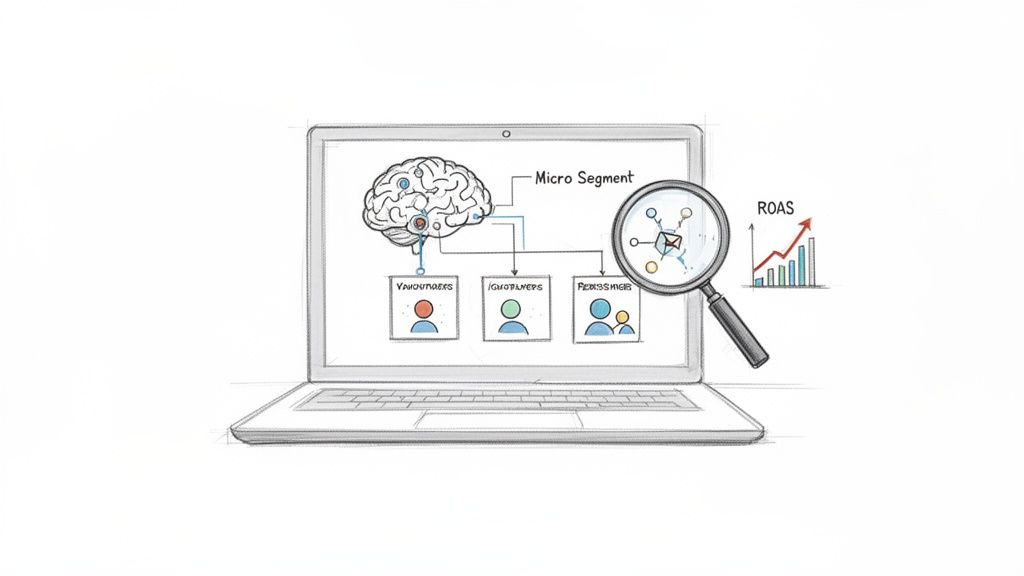
Think about traditional market segmentation like sorting a massive box of LEGOs by hand. You can group them by color, size, and shape, but it’s a slow, manual process. You're bound to miss the more subtle combinations. Now, imagine using a sophisticated machine that not only sorts the basic pieces but also identifies unique combinations and even predicts what you could build next. That’s what AI brings to the table.
AI takes your segmentation strategy from static to dynamic. It moves beyond basic categories like age or location and starts digging into the messy, unstructured data—the stuff like customer reviews, social media comments, and live chat logs. This is where you find the why behind what people do, allowing you to build predictive segments based on future intent, not just past purchases.
Instead of a broad segment of "customers who bought hiking boots," AI can help you pinpoint a micro-segment of "aspiring weekend adventurers." These are people buying their first-ever set of gear who are incredibly receptive to content about beginner-friendly trails. That's a whole different conversation.
Uncovering Hidden Customer Patterns
AI algorithms are built to churn through mountains of data and spot correlations a human analyst could easily overlook. This capability is fundamentally changing how brands think about personalization.
This isn't just a niche tactic anymore; it's a major global trend. Marketers are now expected to predict customer needs with startling accuracy. This isn't a push from businesses, but a pull from customers—a huge 75% of consumers now expect more personalized experiences from the brands they shop with. And when brands deliver, it pays off. Targeted campaigns are responsible for a massive 77% of total marketing ROI, as detailed in a report on marketing trends.
This data-first approach lets you discover segments you didn't even know you had. For instance, an AI tool might scan your product reviews and find a vocal group of customers who consistently rave about your eco-friendly packaging—a feature you barely promote. Just like that, you’ve identified a new psychographic segment: the "sustainability-conscious shopper."
Automating Persona and Campaign Creation
AI’s role doesn’t stop at just finding these groups. Modern tools help you flesh them out and act on what you've learned.
- Building Detailed Personas: You can feed raw data from surveys and purchase histories into a tool like ChatGPT and ask it to create a rich customer persona. It can spit out a detailed profile for "Eco-Conscious Emily," complete with her motivations, frustrations, and preferred channels.
- Automating Targeting: Many marketing platforms now have AI baked in to handle the grunt work. They can automatically build lookalike audiences from your best customers or shuffle users between segments in real-time as their behavior changes.
- Personalizing Content at Scale: AI can write unique email subject lines, suggest different products, and tweak ad copy for each segment. This means "Eco-Conscious Emily" gets a message about your sustainability pledge, while "Bargain-Hunter Ben" gets an alert about a 24-hour flash sale.
The real magic of AI is that it makes sophisticated segmentation accessible to everyone. What once required a team of data scientists can now be done by smaller brands, giving them the power to create hyper-personalized experiences that truly compete with the giants of their industry.
The bottom line is simple. AI isn't some far-off concept anymore; it's a practical, powerful tool for any e-commerce business that wants to get serious about market segmentation. It helps you understand your customers on a much deeper level and act on that knowledge with speed and precision, turning raw data into loyal fans and, ultimately, more revenue.
Measuring Success and Optimizing Your Segments
Launching your market segmentation strategy isn't the finish line—it’s the starting gun. Creating those customer groups is a fantastic first step, but the real magic happens when you start measuring, learning, and refining your approach.
Without solid data, your strategy is built on educated guesses. A data-driven feedback loop, on the other hand, turns segmentation from a one-time project into a dynamic engine for growth.
The key is to pin specific Key Performance Indicators (KPIs) to each of your segments. This immediately clarifies which groups are your superstars and which ones might need a little more attention or a different angle. You stop looking at your business as a single entity and start seeing it as a collection of unique customer relationships.
Key Metrics for Segment Performance
To figure out what’s actually working, you need to track the numbers that tie directly back to your bottom line and how much customers love your brand.
Conversion Rate: This is your moment of truth. Are the tailored messages you're sending to a segment actually convincing them to click "buy"? When a segment's conversion rate is high, you know your messaging has hit the mark.
Customer Lifetime Value (CLV): Think of this as your long-game metric. A segment with a high CLV is packed with your most loyal, profitable customers. This is your cue to double down on retaining these folks.
Return on Ad Spend (ROAS): If you're running targeted ads, ROAS is your financial scorecard. It tells you exactly where your marketing dollars are working hardest. A high ROAS for one segment proves your targeting is not just good—it’s profitable.
Using A/B Testing to Refine Your Strategy
Once you have your KPIs on a dashboard, you can start proactively improving your results with A/B testing. This is simply creating two slightly different versions of an email, ad, or landing page and showing them to different people within the same segment to see which one gets better results.
A/B testing takes the guesswork out of optimization. It lets you make decisions based on what customers actually do, not what you think they'll do. By testing one small thing at a time, you can stack up wins and systematically improve your performance.
So, what does this look like in practice?
You could test two different offers for your "first-time visitors" segment. Does a 15% discount get more sales than a free shipping offer? Or maybe you A/B test ad creative for your "high-value shoppers" segment—does a polished lifestyle photo outperform a simple product shot?
By constantly testing, learning, and rolling out the winners, you ensure your segmentation strategy is always getting sharper and delivering a bigger impact on your business.
Frequently Asked Questions About Market Segmentation
As you move from the theory of market segmentation to the real-world application, a few questions are bound to pop up. It's totally normal to wonder if you're doing it right. Let's walk through some of the most common hurdles to clear things up and get you started with confidence.
How Many Segments Should I Have?
If you're running a small e-commerce store, trying to manage a dozen different segments right out of the gate is a surefire way to get overwhelmed. You'll end up stretched too thin, and the quality of your marketing will suffer.
A great starting point is to focus on three to five core segments. This is a manageable number that allows you to create truly distinct messaging for each group without burning out your team or your budget.
Think about the most high-impact groups first. For most stores, that means segments like:
- New Subscribers: People who just signed up and need a warm welcome.
- VIP Customers: Your loyal, high-spending fans who deserve special treatment.
- Cart Abandoners: Shoppers who were this close to buying and just need a little nudge.
- One-Time Buyers: The crucial group you need to convince to come back for a second purchase.
Once you have these foundational segments dialed in, you can always drill down and get more specific. But remember, the goal here is quality over quantity. A handful of well-defined, well-managed segments will always outperform a dozen that are neglected.
What Are the Biggest Segmentation Mistakes to Avoid?
Even the most experienced marketers can trip up. Knowing the common pitfalls ahead of time helps you sidestep them and keep your strategy on track from the get-go.
One of the most common mistakes is relying only on demographics. Knowing a customer's age and location is a start, but it doesn't tell you why they buy from you. You need to layer in behavioral and psychographic data—what they do on your site, what they value—to get a complete picture.
Another classic error is creating segments that are either too small to be profitable or too vague to be useful.
The whole point of segmentation is to find groups that are distinct enough, reachable enough, and large enough to be worth creating a custom marketing campaign for. If a segment is too niche, you’ll spend more time and money on it than you’ll ever get back.
Can Segmentation Work for a New Business with No Data?
Yes, it absolutely can. You might not have years of purchase history to analyze, but you have more information at your fingertips than you probably realize.
For a new business, you can start with broader segments based on how people find and interact with your store. For example, create a segment for visitors who came from a specific Instagram ad versus those who found you through a Google search. Their intent and awareness levels are completely different.
You can also be proactive. Use simple tools like pop-up surveys, product quizzes, or even just add an extra field to your newsletter sign-up form. Ask a simple question about their goals or interests to gather valuable psychographic insights from day one. Your segments will just get sharper and more data-rich as you grow.
Ready to unlock the tools that make expert segmentation possible? EcomEfficiency bundles over 50 premium e-commerce tools for product research, competitor analysis, and marketing optimization into one simple subscription. Cut your software costs by up to 99% and gain access to industry leaders like Helium10, Semrush, and Pipiads for just $19.99/mo. Start making smarter, data-driven decisions at https://ecomefficiency.com.