A Practical Social Media Content Strategy Template for E-Commerce

Think of a social media content strategy template as your brand's playbook. It’s a living document that turns sporadic, "what should I post today?" moments into a cohesive, goal-oriented system. For an e-commerce brand, this isn't just about getting likes—it's about creating a clear path from a social post to a sale.
The goal is to scale without dubious shortcuts and without hurting your credibility.
Your E-Commerce Social Media Blueprint
The single biggest leap forward any e-commerce brand can make is ditching random posting. Seriously. Having a structured plan is the difference between shouting into the social media void and starting genuine conversations that actually lead to sales. Our downloadable social media content strategy template is built to give you that very structure, turning your social channels into a powerful engine for your brand.
It’s time to move past the content chaos. This system is designed to bring clarity and purpose back into your work. It's a blueprint that helps you nail down a brand voice that connects, find the audience that’s ready to buy, and finally measure the metrics that truly matter to your bottom line. Think of it as the bird's-eye view you need to build a smarter, more profitable social presence.
The Core Components of Your Strategy
A truly effective strategy is so much more than just a content calendar. It's a collection of interconnected documents and guidelines that keep everyone on your team rowing in the same direction. Each piece of the puzzle answers a critical question about your marketing, making sure every post is intentional. The key elements include:
- Goals and KPIs: What are you really trying to do here? This is where you set tangible objectives, like "increase conversion rate from Instagram by 15% in Q3."
- Audience Personas: Who are you actually talking to? Getting granular with personas helps ensure your content hits home with real customer needs and motivations.
- Content Pillars: What are your main themes? I recommend picking 3-5 core content pillars to keep your messaging consistent, recognizable, and valuable.
- Channel Strategy: Where are you going to show up? This part defines the platforms you'll focus on and, just as importantly, how you’ll adapt your content for each one.
A social media marketing strategy is a summary of everything you plan to do and hope to achieve on social media. It guides your actions and lets you know whether you’re succeeding or failing. Keep it concise, not so lofty that it's unattainable.
This framework is what shifts your content from being reactive to proactive. Instead of scrambling to jump on a trend, you'll have a system in place for planning, creating, and sharing content that consistently pushes your business goals forward.
For a deeper look at the high-level planning process, this guide on how to plan social media content has some great, practical steps for growth.
Your Strategy Template at a Glance
Our template organizes all these moving parts into one central hub. It's your command center for all things social. The table below breaks down what you'll find inside and why each section is so critical for driving e-commerce sales.
| Template Section | Why It Matters for Your E-Commerce Brand |
|---|---|
| Goals & KPIs | Aligns social media efforts directly with revenue-driving actions like website clicks, add-to-carts, and final sales. |
| Audience Personas | Helps you craft compelling product descriptions, ads, and stories that speak to your ideal customer's pain points and desires. |
| Content Pillars & Themes | Prevents a product-only feed by creating a mix of educational, entertaining, and community-building content that fosters loyalty. |
| Platform Strategy | Maximizes ROI by focusing your resources on the channels where your target customers are most active and likely to shop. |
| Editorial Calendar | Ensures a consistent brand presence, allowing you to plan for product launches, sales, and seasonal campaigns well in advance. |
| Performance Tracking | Provides the data needed to prove social media's value, optimize your budget, and double down on what works. |
Each part of this template is designed to give you clarity and control, helping you build a social media presence that doesn't just look good—it sells.
Nailing Down Your Goals and Pinpointing Your Audience
Before you even think about drafting a single caption, we need to get two things straight: what does success look like, and who exactly are you talking to? This is the foundation of your entire social media content strategy template.
Jumping in and posting random product shots without a clear objective is like setting sail without a destination. Sure, you’re busy, but you aren't actually getting anywhere. For an e-commerce brand, this means every single post, story, and video has to connect back to a real business result.
Forget about chasing vague ambitions like "get more followers" or "increase engagement." While those numbers feel good to look at, they don't directly pay the bills. Your goals need to be tied to the actions that actually grow your store.
Setting E-Commerce Focused SMART Goals
The most effective goals are always SMART: Specific, Measurable, Achievable, Relevant, and Time-bound. This simple framework is a game-changer because it forces you to move from fuzzy ideas to concrete targets. It grounds your strategy in reality and gives you a clear benchmark to measure against.
For an e-commerce business, this usually means framing your goals around the customer journey. How do you move someone from discovering your brand to making a purchase?
Here’s what that looks like in practice:
Weak Goal: "I want to get more sales from Instagram."
SMART Goal: "Increase the conversion rate from Instagram referral traffic by 15% over the next quarter by promoting user-generated content in our Stories and ads."
Weak Goal: "We need more website traffic."
SMART Goal: "Drive 5,000 qualified landing page visits from Pinterest this month by creating 20 new pins that link directly to our new summer collection."
See the difference? These specific objectives immediately tell you what kind of content you need to create. The first goal demands you prioritize UGC, while the second requires a laser focus on visually compelling pins. Before you go any further, document at least three of your own primary SMART goals in the template.
Building Customer Personas That Actually Guide Content
Once you know what you want to achieve, you have to define who you're trying to reach. A customer persona is a detailed, semi-fictional profile of your ideal buyer, built from real data and solid market research.
This isn’t just a simple demographic summary. The goal is to create a character that feels like a real person, complete with motivations, challenges, and preferences.
A deep understanding of your audience is the secret weapon behind content that truly connects. When you know their pain points and aspirations, you stop selling products and start offering solutions.
To build a persona that’s actually useful, you have to dig into your existing data. Don't guess—investigate. The most valuable insights are often hiding in plain sight.
Where to Find Actionable Audience Data:
- Your E-commerce Dashboard (Shopify, BigCommerce, etc.): Look at customer purchase history, average order value, and location data. Are there patterns in what your best customers buy?
- Google Analytics: Dive into the Audience and Acquisition reports. Find out the age, gender, and interests of your website visitors. See which social channels are already sending you the most valuable traffic.
- Social Media Platform Insights: Instagram, Facebook, and TikTok all provide detailed analytics about your followers. Pay close attention to when they're most active and which content formats they engage with the most.
Example Persona in Action
Let's imagine we’re building a persona for a sustainable activewear brand. By pulling data from the sources above, we can create a profile that makes content creation a whole lot easier.
| Persona Trait | Details | Content Implication |
|---|---|---|
| Name | "Eco-Conscious Chloe" | Gives the persona a human feel. |
| Demographics | Age 28-35, lives in a metro area, works in a creative field. | Content should reflect an urban, modern lifestyle. |
| Motivations | Values sustainability, quality over quantity, and brands with a mission. | Create content about your ethical sourcing and eco-friendly materials. |
| Pain Points | Finds it hard to discover stylish activewear that's also ethically made. | Produce educational carousels comparing fast fashion vs. sustainable fabrics. |
| Social Habits | Active on Instagram and Pinterest; follows wellness influencers and eco-bloggers. | Focus on high-quality visuals for these platforms and consider influencer partnerships. |
This persona, "Chloe," is now your north star. When you're brainstorming content, you'll ask yourself, "Would Chloe find this useful?" or "Does this photo resonate with her lifestyle?" This simple shift in thinking ensures every piece of content you create is designed to hit the mark with the right person.
Go ahead and fill out a persona profile in your template to bring your ideal customer to life.
Developing Your Core Content Pillars
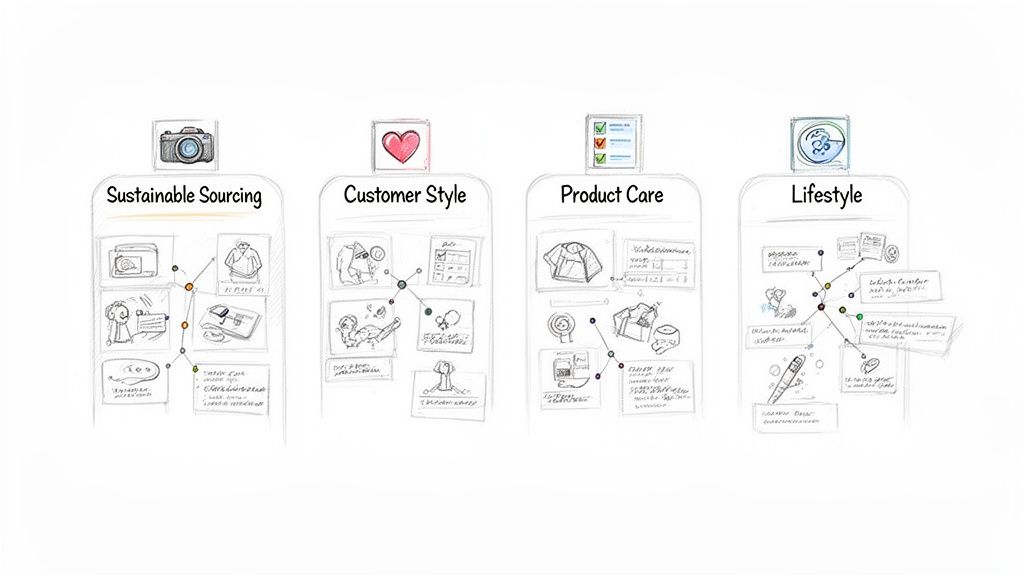
If you've ever stared at a blank calendar, wondering "What on earth should I post today?", I have good news: content pillars are about to become your best friend. They are the 3-5 core themes your brand will own and talk about, time and time again.
Think of them as the main sections of your own brand magazine. They bring structure to your content, tell your audience exactly what to expect from you, and, most importantly, stop the daily scramble for ideas.
Your social media feed should be more than just a random collection of product shots. The best content pillars live at the intersection of what your brand stands for and what your audience actually wants to see.
Think Beyond the Product Pitch
For e-commerce brands, the biggest trap is making every single post about the product. While you obviously need to showcase what you sell, a feed that only ever screams "buy now!" will turn people off fast. Your content pillars are your ticket to thinking bigger, focusing on the lifestyle, values, and solutions your products fit into.
Let's imagine you run a small business selling eco-friendly, handcrafted ceramic mugs. Just posting pictures of mugs will get old. Instead, you could build your strategy around these pillars:
- Pillar 1: The Art of Slow Living. This is all about the feeling your product creates. Think content about mindful morning routines, tips for the perfect coffee break, or cozy scenes from home. You're selling a moment, not just a mug.
- Pillar 2: Behind the Craft. This is where you pull back the curtain and show your work. Share videos from the pottery wheel, tell the stories of your artisans, or explain why you're so committed to sustainable sourcing for your clay.
- Pillar 3: Perfect Pairings. Add value by showing people how to get the most out of your product. You could share recipes for specialty lattes, create guides for brewing the perfect loose-leaf tea, or even team up with local coffee roasters for a giveaway.
The real goal of content pillars is to establish topical authority. When your audience knows you're the go-to source for a specific set of topics, they won't just trust you—they'll actively seek you out.
From Pillars to a Never-Ending Idea List
Once you’ve defined your pillars in your social media content strategy template, the fun begins. Each pillar becomes a deep well you can draw from for countless post ideas. You can brainstorm different formats, angles, and stories for every single theme, ensuring your calendar is always full of fresh, relevant content.
Let's take our ceramic mug brand and see how many ideas we can generate from just one pillar.
Pillar: Behind the Craft
- Instagram Reel: A satisfying time-lapse of a mug taking shape on the pottery wheel.
- Carousel Post: A "Meet the Maker" feature with photos and a quick Q&A with an artisan.
- Blog Post (promoted on social): A deep dive into "Why We Only Use Lead-Free, Non-Toxic Glazes."
- Instagram Story: A fun poll asking followers to vote on the next glaze color.
- Customer Q&A: Answering a common question about caring for handcrafted ceramics.
See how that works? One pillar just spawned five different pieces of content across multiple formats. Now, imagine doing that for all 3-5 of your pillars. You'll build a rich, diverse content library that always feels perfectly on-brand.
Remember the Human Element
As you build out these ideas, don't forget the power of authenticity. AI tools are incredible for brainstorming and speeding up workflows, but recent trends show that people crave content that feels real and human-made.
In fact, human-generated content is now seen as the cornerstone of an effective social strategy. A survey of over 2,300 consumers found that brands should make authentic, human-created content their top priority. This shows a huge demand for genuine connection. You can discover more insights from the 2026 content strategy report to see how this is shaping the future.
This means your pillars should have plenty of room for real stories, customer features, and behind-the-scenes moments that reveal the people and passion behind your brand.
Tailoring Your Content for Each Social Platform
Posting the same exact content across all your social media channels is one of the fastest ways to get ignored. Real results come from understanding and respecting the unique culture of each platform—what users expect to see, how the algorithm works, and the unwritten rules of engagement. This is where we move from high-level planning in your template to boots-on-the-ground execution.
Think of it this way: you wouldn't wear a tuxedo to a backyard BBQ. In the same way, that polished corporate video that does wonders on LinkedIn will almost certainly fall flat on TikTok, where people want to see raw, authentic, and creative content.
The trick is to adapt your core message to fit the native environment of each channel. It's how you work smarter, not harder, boosting your reach and engagement without having to reinvent the wheel for every single post.
Customizing for Maximum Impact
This isn't about creating five completely different campaigns. It's about reformatting and reframing your core content pillars to speak the language of each platform. A single idea—like showing off the sustainable materials in your new sneaker line—can be brought to life in wildly different ways.
Taking a platform-specific approach is non-negotiable if you care about ROI. Engagement rates are all over the map depending on the network, which directly impacts sales. For instance, TikTok creators with under 100,000 followers see an incredible 7.5% engagement rate, blowing Instagram's 3.65% average out of the water.
These numbers tell a story: a one-size-fits-all strategy leaves a lot of money and opportunity on the table. If you want to dive deeper, you can discover more insights about 2026 social media trends to see just how critical this is becoming.
Let’s get into the nitty-gritty of how to adapt your content for the platforms that matter most for e-commerce.
TikTok: Where Raw Authenticity Wins
TikTok is a discovery engine, plain and simple. It's fueled by entertainment and unfiltered moments. People are there to be amused and learn something new, and they want it served up in a fun, fast-paced, and often unpolished format.
- What to Post: Short-form video is king. Think behind-the-scenes glimpses of your workshop, packing orders with a trending sound, or "day in the life" vlogs that show the human side of your brand.
- E-commerce Example: Imagine a small-batch skincare brand. They could film a quick, lo-fi video showing the founder mixing a new face mask, casually explaining the benefits of each ingredient as they add it to the bowl. You’re educating and entertaining at the same time, not just running a slick ad.
Your TikToks need to feel like they belong on the "For You Page." If a user sniffs out a traditional advertisement, they'll scroll right past it. Lean into creativity and personality over high production value every time.
Instagram: Build Community and Educate
Instagram is a visual playground where aesthetics and community are everything. Because it supports a wider variety of formats (Reels, Carousels, Stories, photos), it's the perfect place to tell a deeper, more nuanced brand story.
- What to Post: Use high-quality photos, multi-slide carousels, and engaging Reels. Carousels are fantastic for educational content—think "5 Ways to Style Our New Scarf." Reels can grab attention with quick tutorials, styling tips, or trend-based humor that feels relevant.
- E-commerce Example: A sustainable home goods store could create a beautiful carousel post detailing their eco-friendly packaging. The first slide hooks them, and each subsequent slide uses great photography and minimal text to walk followers through the materials used and their environmental benefits. End with a question to get a conversation going in the comments.
Pinterest: Drive Highly Qualified Traffic
Don't think of Pinterest as just another social network; it’s a visual search engine. Users come here to find inspiration and actively plan future purchases, which makes it an incredibly powerful tool for driving traffic directly to your product pages.
- What to Post: Create eye-catching, vertical Pins with clear, compelling text overlays. Your Pins should act like mini-billboards that solve a problem or offer inspiration, always with a direct link back to your shop.
- E-commerce Example: A brand selling custom planners could design a Pin with the headline, "How to Organize Your Entire Week in 15 Minutes." The image would show their planner in action, looking clean and organized. That Pin links directly to the product page, catching the user at the exact moment they're searching for a solution to their problem.
Putting Your Strategy Into Action
A perfectly crafted plan is only as good as its execution. This is where your detailed social media content strategy template stops being a document and becomes your day-to-day roadmap. It’s time to take your big ideas and turn them into a real, functioning content machine.
The goal here is to move from high-level pillars to a tangible, week-by-week calendar. We're talking about mapping out everything—post formats, captions, hashtags, and the all-important calls-to-action (CTAs). Getting this structure down on paper (or in a spreadsheet) is what finally ends that daily "what on earth do I post today?" panic. It ensures every single thing you share has a clear purpose.
Building a Modern Content Workflow
In social media, speed and quality have to coexist. A modern workflow isn't about working harder; it's about working smarter, blending human creativity with the right tech to produce great content without burning out your team. This is especially true for e-commerce brands juggling product launches, sales, and seasonal campaigns that demand a constant stream of fresh content.
Let's walk through a simple but incredibly effective workflow I've seen work time and time again.
Brief It Out: For every content idea, start with a simple creative brief. This doesn't have to be a five-page document. Just nail down the essentials: goal, key message, target platform, format (like a Reel or Carousel), and the desired CTA.
Create with a Boost: This is where you bring in the tools to get ahead. I often use AI like ChatGPT to spitball caption ideas or brainstorm a few killer hooks. For visuals, tools like Midjourney or Flair.ai can be lifesavers for creating unique product mockups when a full-blown photoshoot just isn't in the budget.
Always Review: Have a clear, non-negotiable review process. Whether it's a teammate giving it a once-over or just you stepping away and coming back with fresh eyes, check every post against the brief and your brand voice guidelines. Typos happen, but they don't have to.
Schedule and Engage: Batching content with a scheduling tool is a game-changer. It frees you up to do the most important part of social media: actually engaging with your community in real-time instead of always being stuck in "posting" mode.
A great strategy isn’t just about what you post, but how you create and manage it. Building a repeatable system for briefing, creation, and review is the secret to scaling your efforts sustainably and avoiding content chaos.
Smart Repurposing to Maximize Your Efforts
Burnout is real, and one of its biggest causes is the feeling that you constantly need to reinvent the wheel. You don't. One of the smartest things you can do is strategically repurpose your top-performing content. This means taking one great idea and slicing and dicing it for different platforms and formats.
This chart shows exactly how a single content pillar can be broken down to feed multiple channels.
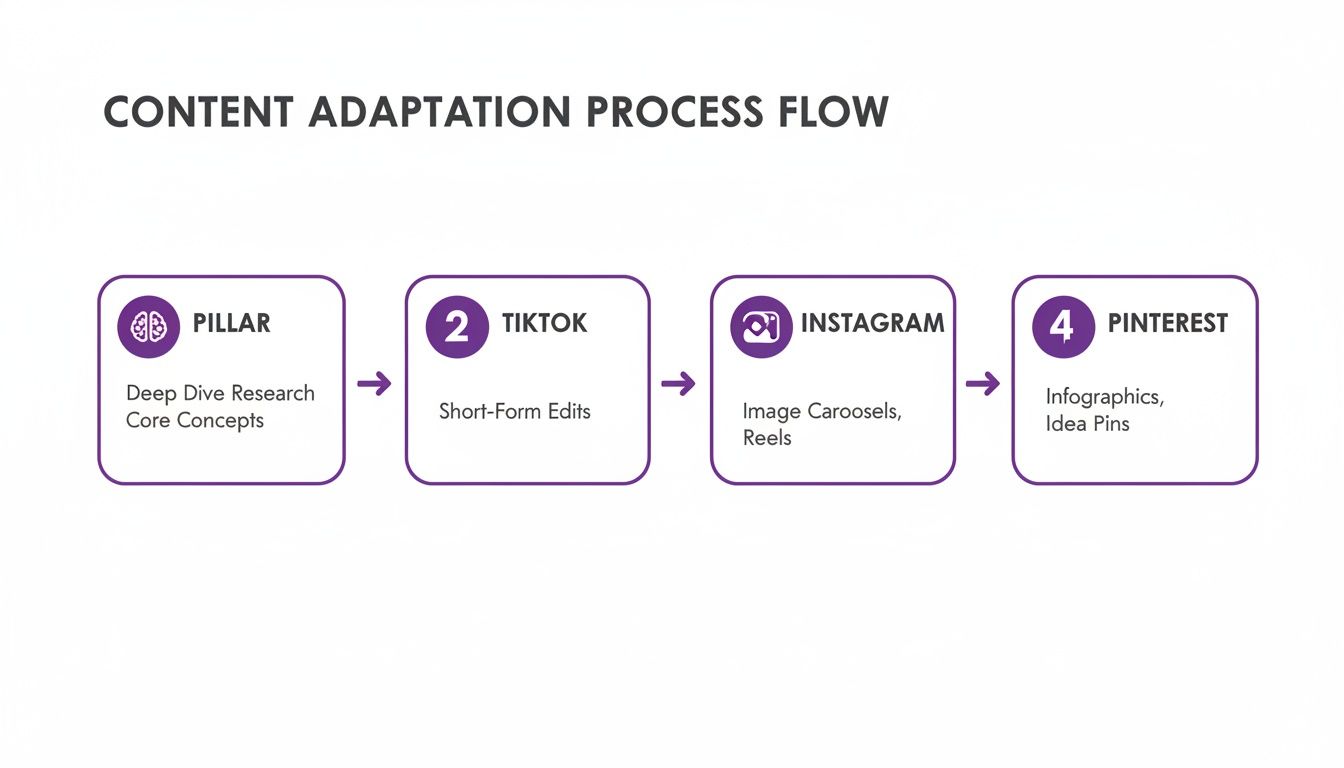
As you can see, one strong concept can fuel your entire content engine. It saves a ton of time while keeping your brand message consistent everywhere.
Let’s say you have a killer blog post on "The Benefits of Sustainable Fabrics." You don't just post it once and call it a day. That one asset can become:
- A TikTok: A quick, tactile video showing off the look and feel of the different fabrics.
- An Instagram Carousel: A beautifully designed multi-slide post breaking down three key benefits with minimal, punchy text.
- A Pinterest Idea Pin: A step-by-step visual guide on how to properly care for a new linen shirt.
- A LinkedIn Post: A text-only post pulling a surprising stat from the article to spark a professional discussion.
This approach squeezes every drop of value out of your creative efforts. To keep getting better, you can dive into more advanced techniques like A/B testing different formats and post times. This is fundamental for optimizing your content strategy. By keeping a close eye on your analytics, you'll quickly spot your "greatest hits" and know exactly which ones to repurpose next, creating a powerful feedback loop that makes your content better and better over time.
Got Questions? We've Got Answers
Diving into a new social media strategy can bring up a lot of questions. I get it. To help you hit the ground running, I’ve put together some straight-to-the-point answers for the most common hurdles e-commerce owners face.
How Often Should My E-Commerce Brand Post on Social Media?
Honestly, the magic number doesn't exist. The real key is consistency over frequency. It's way more effective to post three genuinely great pieces of content each week than to scramble and push out seven mediocre ones.
For your core platforms like Instagram and Facebook, aim for a solid 3-5 high-quality posts per week. That’s a manageable rhythm for most brands. Now, for something like TikTok, the pace is much faster. Content there has a shorter shelf life, so posting 1-3 times a day can be a game-changer for growth, if you have the content ready to go.
Never let the pressure to post more compromise the quality of what you're sharing. Dig into your analytics to see when your audience is actually online, and don't be afraid to experiment. That's what the template is for—to help you find a sustainable groove that works for you.
Burnout is the number one enemy of a solid social strategy. Find a posting schedule you can actually stick with long-term. A consistent, reliable presence builds trust and keeps you top-of-mind way better than random bursts of activity.
What Are the Most Important Social Media Metrics to Track?
Likes and follower counts feel good, but they don't pay the bills. For an e-commerce brand, you have to look past these vanity metrics and focus on what actually drives revenue. Sure, high engagement (comments, shares, saves) is a fantastic indicator that your content is hitting the mark, but it's not the whole story.
Your most important metrics are the ones tied directly to your business goals. Prioritize these KPIs:
- Click-Through Rate (CTR): This is the percentage of people who saw your post and actually clicked the link to your site. It’s a direct measure of how compelling your content and call-to-action are.
- Social Media Referral Traffic: Jump into Google Analytics or your Shopify dashboard. How many people are landing on your website from your social channels? This tells you if your social presence is successfully driving traffic.
- Conversion Rate from Social: This is the big one. Of all the visitors who came from social media, what percentage of them made a purchase? This is your ultimate measure of success.
Getting tools like the Meta Pixel or TikTok Pixel set up is non-negotiable. They are essential for connecting the dots between your social media efforts and actual sales, allowing you to calculate your true return on investment (ROI).
How Can AI Tools Help Me Use This Template Efficiently?
Think of AI as your super-smart assistant, not your replacement. The heart of your social media content strategy template—your goals, your deep understanding of your audience, your unique brand voice—that all needs to come from you. But when it comes to the heavy lifting of execution, AI is a massive help.
Fire up a tool like ChatGPT to brainstorm a month's worth of post ideas based on your content pillars. You can have dozens of options in minutes. Use it to write five different caption variations for a single post so you can pick the best one.
Need stunning product visuals without a pricey photoshoot? AI image generators like Flair.ai can create incredible lifestyle shots that make your products shine. By offloading these time-sucking tasks to AI, you free up your brainpower for what really matters: strategic planning, analyzing what's working, and actually talking to your community.
How Do I Get Good User-Generated Content for My Brand?
The secret to getting amazing user-generated content (UGC) is to ask for it and make it dead simple for your customers to share. First things first, come up with a unique, catchy branded hashtag. Then, put it everywhere—your social bios, your email signature, and even on your product packaging.
Next, you have to be proactive. Regularly search for your hashtag and for any posts where your brand is tagged. You can also run a contest or offer a small discount to customers who share photos of their purchases. When you find a gem, always slide into their DMs to ask for permission to repost it on your channels. And when you do, give them full credit.
Authentic UGC is pure gold for social proof. It builds trust and credibility in a way that even the most polished, professional ad never could.
Ready to streamline your entire e-commerce operation? The tools mentioned here—from AI image generators to powerful analytics platforms—are just the beginning. With EcomEfficiency, you get access to 50+ premium tools like Midjourney, ChatGPT, Semrush, and more, all for one low monthly price. Stop juggling subscriptions and start saving up to 99% on the software you need to grow. Explore EcomEfficiency and unlock your all-in-one toolkit today.