How to Sell on TikTok Shop A Practical Guide

So, you're thinking about selling on TikTok Shop. At its core, it's about setting up a seller account, creating killer video content for your products, and connecting with people through shoppable videos and livestreams. This is a space where entertainment drives sales, so authentic, trend-savvy content is your golden ticket.
The goal is to scale without dubious shortcuts and without hurting your credibility.
Why TikTok Shop Is Your Next Big Opportunity
Throw out everything you know about traditional eCommerce. People aren't coming to TikTok with a shopping list; they’re there to be entertained. TikTok Shop completely flips the script—it’s all about discovery commerce.
Users stumble upon products they never knew they needed, all thanks to a video that made them laugh, taught them a new hack, or just grabbed their attention. This creates a perfect storm for impulse buys, all driven by genuine content that hits the right note. It's a powerful shift from "search and buy" to "scroll, discover, and buy."
And the audience? It's massive and incredibly active.
This infographic really puts the scale of the TikTok Shop ecosystem into perspective, showing everything from its massive user base to the rapidly growing number of sellers jumping in.
The numbers don't lie. You've got a huge audience, and a big chunk of them are already comfortable buying directly through the app. It's fertile ground for any brand willing to dive in.
The Power of Shoppertainment
This blend of shopping and entertainment—or "shoppertainment"—is the secret sauce behind TikTok Shop's success. Your content feed is your storefront. Forget boring product grids.
A great TikTok video doesn't feel like an ad; it feels like a solution, a life hack, or pure entertainment. When you seamlessly tag a product in that experience, the purchase becomes a natural next step for the viewer.
This is how you build a real community and earn trust. When a creator genuinely shows off a product they love in a real, relatable way, it's infinitely more persuasive than a polished, corporate ad. The algorithm then does the heavy lifting, pushing that authentic content to millions of users it knows will be interested.
A Rapidly Growing Marketplace
TikTok Shop has exploded onto the scene, boasting around 1.6 billion monthly active users worldwide and more than 500,000 sellers in the U.S. alone. What's really telling is that 58% of users say they've bought something directly on the app. This isn't just a social network anymore; it's a full-blown sales channel.
Some small businesses have even seen their sales jump by 70% year over year after getting on the platform. You can dig into more insights about TikTok Shop's growth to see the full picture.
Your command center for all this is the TikTok Seller Center. It's the dashboard where you'll handle everything—from creating product listings and managing inventory to tracking your sales and analytics.
Getting comfortable with this interface is your first real step. It's the gateway to launching your store and tapping into this massive, engaged market.
Getting Your TikTok Shop Up and Running
Jumping into TikTok Shop involves a few setup steps, but honestly, it’s a pretty smooth process. The platform is built for speed, and most sellers I've seen get their store live in less than an hour. Let's walk through laying that essential groundwork so you can get to the fun part: making sales.
First thing's first: make sure you're eligible. The rules can be a little different depending on where you are, so it's always a good idea to check the latest requirements for your country. If you're an individual seller in the U.S., for example, you just need to be over 18 and a resident. Businesses, on the other hand, will need to have their official registration documents handy.
The Seller Center Sign-Up
Everything you do will be managed from the TikTok Seller Center. Think of it as your mission control for product listings, orders, promotions, and analytics. Signing up here is your official ticket to the game.
Head over to the Seller Center portal and you'll be asked to choose between registering as an individual or a corporation. This choice matters because it determines the documents you'll need to get verified.
- For individual sellers: You'll typically need a government-issued ID, like your driver's license or passport.
- For corporate sellers: This is where you'll need your business registration info, like your EIN letter.
My advice? Have these documents scanned and ready to go before you start. This is the single biggest hang-up I see for new sellers. Scrambling to find the right paperwork is what causes delays, so being prepared is your first quick win.
Pro Tip: Make sure the name and information on your documents perfectly match what you type into the registration form. Even a tiny typo can flag your application for a manual review, which can really slow things down.
Once you hit submit, verification usually takes a day or two. As soon as you see that approval email, it's time to set up the nuts and bolts of your shop.
Linking Your Bank and Setting Up Shipping
Once your account is verified, the next critical move is to connect your bank account and lock in your shipping settings. This is how you get paid and how customers get their stuff—so you want to get it right.
Adding a bank account is simple; you just need your account and routing numbers for direct deposits. No surprises there.
For shipping, you've got options. You can either handle fulfillment completely on your own or use the "Shipped by Seller" method, which lets you print labels directly from the Seller Center. TikTok's shipping rates are often quite competitive and are tiered by weight, which can save you a good chunk of cash as you start to scale up.
You’ll also need to set your warehouse address and define your return policy. A clear, customer-friendly return policy is huge for building trust, especially on a platform where so many sales are impulse buys. Nailing these logistical details from the get-go will save you from some serious headaches later and put you on the fast track to selling successfully.
Crafting Product Listings That Actually Convert
Think of your TikTok Shop product listing as the final handshake in the sales process. A killer video gets someone to your shop, but a weak, uninspired product page is where they'll ghost you. The trick is to stop thinking like a traditional e-commerce manager and start thinking like a TikTok user.
Let's start with your product titles. Forget the dry, keyword-stuffed titles you might use on Amazon or Google Shopping. They just don't work here. On TikTok, titles need to be punchy, descriptive, and instantly clear.
For example, a title like "Ergonomic H-Series Lumbar Support Device" is a total snoozefest. A much better approach would be something like, "Viral Back-Relief Stretcher for Desk Workers." Right away, the user knows what it is, who it's for, and why it's trending—all using language that feels native to the platform.
Your descriptions need that same energy. Keep them scannable and built for mobile. I always recommend using bullet points or super short paragraphs to highlight the top three to five benefits. Get straight to the point.
Build Trust with TikTok-Native Visuals
Here’s where so many sellers get it wrong: your product visuals are the heart of your listing. Standard, white-background studio shots can look sterile and out of place. They might work elsewhere, but on TikTok, they can kill the vibe and break the trust you just built with your video.
This audience doesn't want polished and perfect; they want real.
Your visuals should feel like authentic, user-generated content (UGC). Think less "professional photoshoot" and more "my friend just sent me this cool video."
- Show, don't just tell. Instead of listing features in text, create short video clips that show the product solving a problem. Got a portable blender? Show someone whipping up a smoothie at their chaotic desk or right after a sweaty gym session.
- Capture the "aha!" moment. This is gold. It’s the satisfying spray from a power washer cleaning a grimy patio or the look on someone's face when a dress fits them perfectly. That's the moment that sells.
- Use real people. Feature relatable, diverse people using your product. Viewers need to see themselves in your content, and that connection is far more powerful than any airbrushed model could ever be.
These raw, authentic visuals are what give a user the confidence to tap that "buy now" button.
Your goal is to make the product page feel like a natural extension of the video that brought them there. The vibe should be consistent—if the video was fun and high-energy, the product visuals should reflect that.
Structuring Your Product Details for Success
Beyond the creative elements, you need to nail the technical setup in the TikTok Seller Center. Don't skip any fields. Filling everything out completely gives both the TikTok algorithm and your potential customer all the information they need to make a decision.
To really dial in your listings, focus on these core components. I've put together a quick-glance table that I use as a checklist for every product I launch.
Key Elements of a High-Converting TikTok Shop Product Listing
This table breaks down the essentials for creating a product listing that not only looks good but is structured to perform well within the TikTok Shop ecosystem.
| Component | Best Practice | Why It Matters |
|---|---|---|
| Product Title | Use descriptive, benefit-driven keywords. Keep it under 60 characters. | Grabs attention immediately and helps you show up in TikTok's native search. |
| Product Images | Upload 3-5 high-quality images. Mix lifestyle shots with clear product views. | Gives a full picture of the product, building confidence and answering questions before they're asked. |
| Product Video | Include a short, 15-30 second vertical video showing the product in use. | Massively boosts engagement and conversion rates by demonstrating value in an instant. |
| Description | Use short, bulleted lists to outline the main features and benefits. | Makes information incredibly easy to scan on a phone, respecting the user's short attention span. |
| Pricing Strategy | Price competitively, but don't forget TikTok's commission. Use flash sales to create urgency. | Attracts buyers while protecting your margins. Nothing drives impulse buys on this platform like a good limited-time offer. |
Getting these elements right is the difference between a shop that gets a few random sales and one that consistently converts casual viewers into paying customers. It's a foundational skill for anyone serious about learning how to sell on TikTok Shop.
Creating Content That Sells Without Being Salesy
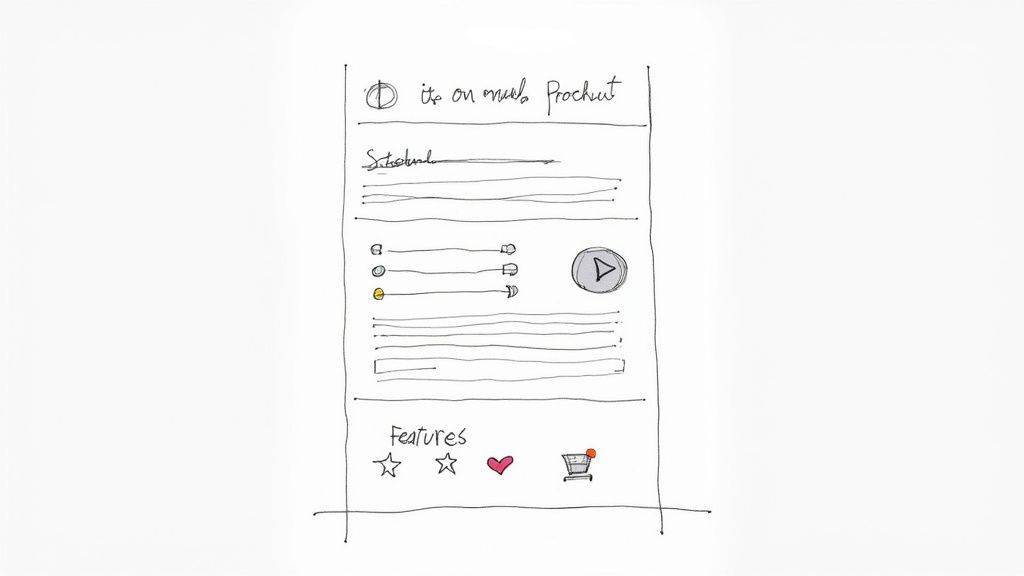
On TikTok, your content is your storefront. The moment you start sounding like a cheesy late-night infomercial, you've already lost the sale. The real secret to learning how to sell on TikTok Shop is to almost forget you’re selling anything at all.
Your focus should be on creating content that entertains, educates, or inspires. The sale should feel like a natural side effect of a great video, not the entire point of its existence. People are scrolling for a good time, not a hard pitch. Your job is to weave your products into that experience so seamlessly they barely notice. This magic happens in three main ways: shoppable videos, LIVE shopping events, and affiliate collaborations.
Turning Views into Sales with Shoppable Videos
Your everyday, organic videos are your most powerful and scalable sales tools. I'm not talking about polished ads. I'm talking about the TikToks your audience already loves—unboxing hauls, quick tutorials, behind-the-scenes glimpses, or funny videos that jump on a trending sound. The only real difference is that small, clickable product link.
Put yourself in the user's shoes. They're watching a strangely satisfying video of someone blasting grime off a patio with a specific pressure washer. The result is incredible. And look at that—the product link is right there, offering an instant fix to a problem they just saw solved. It works because it's authentic.
Here are a few ways to make this work for you:
- Solve a Problem: Create "how-to" content where your product is the hero of the story.
- Show the Transformation: Before-and-after videos are pure gold on TikTok. They provide a clear, visual payoff that’s hard to ignore.
- Tell a Story: Share the journey of how a product is made or feature a customer's success story.
The goal is to make the product tag feel like a helpful tip, not an aggressive CTA. This keeps the native, casual feel of the platform and builds a ton of trust with your viewers.
Mastering the Art of TikTok LIVE Shopping
Think of TikTok LIVEs as a modern-day QVC, but way more interactive and urgent. They're part flash sale, part live Q&A session. This creates a real-time buzz and gives you a direct line to your audience, which is probably why we've seen a 93% growth in LIVE sales over the last year.
Successful LIVEs are about more than just holding up products to the camera; they’re about creating a shared experience. A phenomenal example is the beauty brand P.Louise. They set a UK record by generating over $2 million in a single, marathon 12-hour LIVE session. That's the power of live commerce.
But you can't just hit the "Go LIVE" button and hope for the best. You need a game plan.
Pro Tip: Structure your LIVE with a clear beginning, middle, and end. Kick things off with high energy to grab attention, then move into product demos or an AMA (Ask Me Anything), and wrap up with a strong call to action. A limited-time coupon that expires when the stream ends works wonders.
Always test your setup beforehand. Good lighting and clear audio are non-negotiable. And be sure to pin your top-selling products to the screen so viewers can easily add them to their cart without leaving the stream.
Amplify Your Reach with the Affiliate Program
Here's the best part: you don't have to do all the heavy lifting yourself. The TikTok Shop Affiliate Program lets you partner with creators who will promote your products to their own dedicated audiences. For brands looking to build credibility and reach new customers fast, this is a game-changer.
Creators are pros at making content that feels genuine. When they recommend a product, their followers actually listen. It’s the ultimate form of social proof.
For instance, the wellness brand TRIP grew its affiliate army to over 150,000 creators. This led to a massive 449% growth in sales during their campaign weeks. They didn't have to create thousands of videos; they empowered a community to sell for them. You provide the product and the commission, and the creators handle the authentic, engaging content. It's a powerful, low-risk way to pour gasoline on your sales fire.
How to Optimize and Scale Your TikTok Shop
Making your first few sales is a rush. But let's be real—the real work begins when you need to turn that initial excitement into a real, scalable business. That means graduating from guesswork to data-driven strategy, and your home base for that is the TikTok Seller Center.
It's easy to get lost in all the numbers. Don't try to track everything at once. From my experience, you only need to obsess over a few key metrics that directly tell you if your shop is healthy and growing.
Here's what I keep a close eye on:
- Gross Merchandise Value (GMV): This is your big-picture number—the total sales value over a set period. It's the most straightforward measure of your shop's momentum.
- Conversion Rate: This tells you what percentage of viewers actually hit "buy." If this number is high, your content and product pages are doing their job. If it's low, something is off.
- Video-to-Purchase Attribution: This is pure gold. It shows you exactly which videos are making you money. It’s the key to figuring out what content your audience truly connects with.
Zeroing in on these KPIs clears out the noise. When you see a video with a killer conversion rate, you’ve struck a nerve. The next move is simple: make more content just like it.
Using Data to Sharpen Your Strategy
Analytics are worthless unless you act on them. Once you’ve pinpointed your best-performing videos, you need to play detective. Was it the hook in the first three seconds? The trending sound you used? The specific way you showed the product in action? Whatever it was, replicate those winning elements in your next videos to build on that success.
This data-first mindset should guide everything. Your sales data will show you which products are flying off the shelves—maybe it’s time for a targeted promotion or a bundle deal to pour fuel on the fire. On the flip side, if a product has a dismal conversion rate, it’s a red flag. Is the price too high? Is the listing weak? Or is the content you’re making for it just not landing?
Think of your TikTok Shop analytics dashboard as a treasure map. It shows you exactly where customers are coming from and what makes them tick. Trying to scale without it is like driving cross-country with no GPS.
Streamlining Your Operations for Growth
As sales start picking up, so does the workload. A messy fulfillment process or slow customer service can wreck your shop's reputation overnight. Before you even think about scaling, you absolutely have to get your backend operations buttoned up.
Start with shipping. A smooth process is non-negotiable. Using TikTok’s "Shipped by Seller" feature lets you print labels right from the Seller Center. This is a huge time-saver and automatically pings the customer with tracking info, which drastically cuts down on those "where's my order?" messages.
A transparent and fair return policy is just as important. For a hesitant buyer, seeing a clear return policy builds the trust needed to make a purchase. Make sure yours is easy to find and even easier to understand.
It's also fascinating to see how different markets operate. In Southeast Asia, TikTok Shop is an absolute juggernaut, with Thailand alone hitting $512.79 million in sales. The United States is still growing at around $45 million. This massive difference really underscores how ingrained mobile-first shopping is in Asian markets. You can dig into more of these numbers by checking out TikTok Shop's global marketplace performance.
Putting TikTok’s Promotional Tools to Work
Finally, you need to use the tools TikTok gives you. The platform is built for impulse buys, and its promotional features are designed to create that sense of urgency.
- Discount Campaigns: These are your bread and butter. Set up simple percentage-off or fixed-amount discounts to catch the eye of deal-hunters.
- Flash Sales: Nothing creates FOMO like a ticking clock. Limited-time offers can create huge sales spikes, especially if you hype them up in your videos and on LIVEs beforehand.
- Product Bundles: This is a great way to increase your average order value. Group a few related products, knock a little off the total price, and watch customers add more to their cart.
When you combine sharp data analysis with efficient operations and smart promotions, you build a powerful growth engine. This is how you stop just having a shop and start building a real, lasting brand on TikTok.
Common Questions About Selling on TikTok Shop
Let's tackle some of the most common questions that pop up when you're getting started. Anytime you jump into a new sales channel, there's a learning curve. Getting these key details sorted out first will save you a ton of headaches down the road.
Think of this as your quick-start FAQ, designed to give you the practical answers you need to get your shop off the ground.
What Are the Requirements to Open a TikTok Shop?
Getting your foot in the door is pretty straightforward. The first thing to know is that TikTok Shop is only available in certain regions, like the US, UK, and several countries in Southeast Asia, so you need to be based in one of them.
If you’re in the US and selling as an individual, you just need to be over 18 years old and a legal resident. For businesses, you’ll have to provide your official registration documents so TikTok can verify you're a legitimate company.
A lot of people think you need a massive following to even be considered. That's not true. While having an audience gives you a head start, there’s no official follower minimum for businesses setting up a shop.
The other big piece is making sure your products are allowed. TikTok is pretty clear about what you can and can't sell, with a detailed list of prohibited items. Do yourself a favor and check that list before you start the sign-up process.
How Much Does It Cost to Sell on TikTok Shop?
Here’s some good news: creating your shop won't cost you a dime. It’s completely free to set up.
Of course, TikTok has to make its money somewhere, and that's through a commission fee on every sale. They often sweeten the deal for new sellers with a lower promotional rate for your first 90 days.
Once that intro period is over, the standard commission kicks in. It usually lands somewhere between 2% and 8%, changing based on your product category. This fee is taken out automatically before the money hits your account, so there's no invoicing to worry about. Just be sure to build this commission into your pricing from the very beginning to protect your profit margins.
Can I Connect My Shopify Store to TikTok Shop?
Yes, you absolutely can. In fact, if you’re already running a Shopify store, this is the best way to do it.
TikTok has an official integration that links both platforms together, which is a massive time-saver. It lets you:
- Sync your entire product catalog automatically.
- Manage all TikTok Shop orders right from your Shopify dashboard.
- Keep inventory levels updated across both channels.
It eliminates the tedious work of managing two separate systems and helps prevent overselling.
Getting it set up is simple. Just head over to the Shopify App Store, find the official TikTok app, and install it. The app will walk you through the steps to connect your accounts and get your products synced.
Ready to discover winning products, analyze competitors, and create high-converting ads for your TikTok Shop? EcomEfficiency bundles over 50+ premium AI, SEO, and ad-spy tools into one affordable subscription, cutting your software costs by up to 99%. Find out more at EcomEfficiency.